ZJ ENERGY SYSTEMS / LITHIUM FORKLIFTS
Lithium forklifts
built around the work.
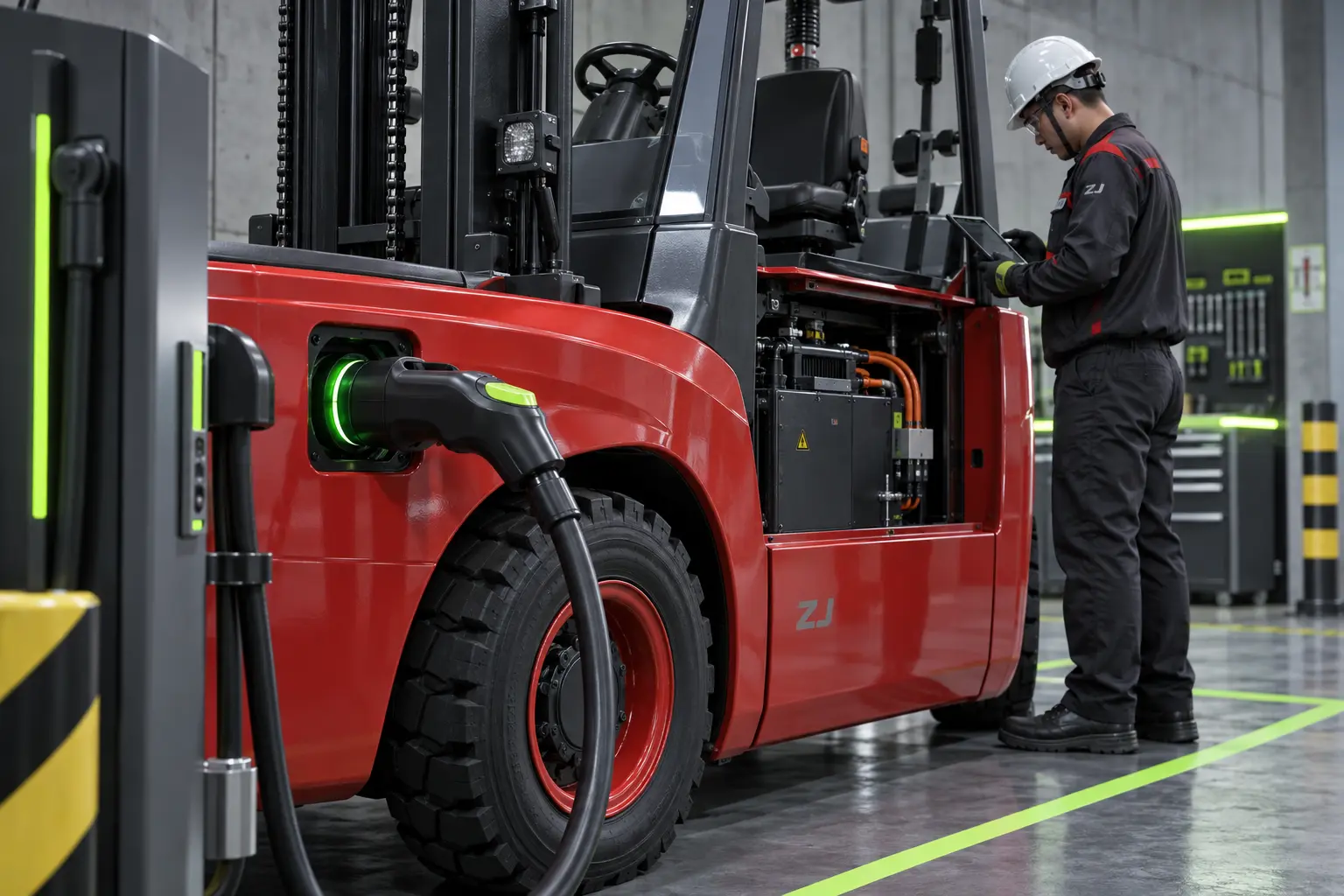
A lithium electric forklift is a complete power system—not only a battery. Compare the truck, load, shift, charger, workplace and destination before requesting a configured offer.
- 10
- E Series models
- 1–10 t
- Listed capacity range
- 4
- Stackers explicitly listing lithium direction
01 / LITHIUM ELECTRIC FORKLIFT GUIDE
Define the requirement.
Then choose the energy package.
Lithium-ion can be a useful direction for suitable electric material-handling work, but model compatibility and real duty remain the first checks.
What is a lithium forklift?
A lithium forklift is an electric material-handling truck equipped with a compatible lithium-ion traction battery, battery management system and charger. The truck controls, voltage, connector, protection strategy and operating environment must be reviewed as one system.
Buyers may also search for “lithium battery forklift”, “lithium-powered forklift” or “electric forklift with lithium battery”. These terms describe an energy direction, not automatic suitability for every model or application.
Read the battery and charging guideOpportunity-charging direction
Short planned charging windows may support some duty cycles when the battery, charger and operating plan are correctly matched.
No tailpipe emissions at point of use
A lithium electric forklift has no combustion exhaust at the truck, while site electricity and local operating rules still require review.
Consistent power-system planning
Battery, BMS, charger and controls can be specified as one operating package instead of treated as separate items.
Reduced battery-service tasks
Lithium-ion systems do not require the watering routine associated with flooded lead-acid batteries; inspections and manufacturer instructions still apply.
02 / COMPLETE POWER SYSTEM
Battery, BMS, charger.
One connected specification.
Ask the supplier to identify every component and destination requirement instead of quoting an unspecified “lithium option”.
Battery pack
Confirm chemistry, nominal voltage, capacity, enclosure, connector and model compatibility.
Battery management
The BMS, truck controls and protection strategy must communicate as one approved system.
Matched charger
Input voltage, phase, frequency, output, connector and charging profile must match the supplied battery.
Truck controls
Drive and hydraulic systems must be configured for the selected voltage and expected duty cycle.
Site infrastructure
Check electrical capacity, protected charging position, cable route, ventilation rules and operator access.
Operating routine
Plan shifts, peaks, breaks, charging windows, temperature and the response to an interrupted charge.
03 / ZJ E SERIES ELECTRIC FORKLIFTS
Ten counterbalance models.
One model-specific lithium review.
The E Series covers listed capacities from 1 to 10 tonnes. The table supports model shortlisting; lithium battery availability must be confirmed for the exact model.
| Model | Rated capacity | Load centre | Lift height | Body width | Turning radius | Details |
|---|---|---|---|---|---|---|
| ZJ E10 | 1 t | 500 mm | 3000 mm | 1100 / 1200 mm | 1900 mm | Review |
| ZJ E15 | 1.5 t | 500 mm | 3000 mm | 1100 / 1200 mm | 2250 mm | Review |
| ZJ E20 | 2 t | 500 mm | 3000 mm | 1100 / 1200 mm | 2400 mm | Review |
| ZJ E25 | 2.5 t | 500 mm | 3000 mm | 1100 / 1200 mm | 2300 mm | Review |
| ZJ E30 | 3 t | 500 mm | 3000 mm | 1200 mm | 2500 mm | Review |
| ZJ E35 | 3.5 t | 500 mm | 3000 mm | 1200 mm | 2850 mm | Review |
| ZJ E40 | 4 t | 500 mm | 3000 mm | 1200 mm | 2850 mm | Review |
| ZJ E50 | 5 t | 500 mm | 3000 mm | 1200 mm | 3300 mm | Review |
| ZJ E70 | 7 t | 600 mm | 3000 mm | 2000 mm | 3180 mm | Review |
| ZJ E100 | 10 t | 500 mm | 3000 mm | 2000 mm | 3460 mm | Review |
Use rated capacity with the real load centre, required height, mast and attachment. Final capacity and lithium configuration require confirmation.
04 / APPLICATION FIT
Where lithium forklifts
may fit the operation.
Application names are starting points. Selection still depends on the measured load, route, duty, environment and charging plan.
Warehouse logistics
Indoor pallet transfer, racking support and loading routes where aisle geometry, floor condition and charging access are known.
Manufacturing supply
Repeat movement between receiving, storage and work cells with defined peaks, travel distances and load frequency.
Food & beverage distribution
Clean material flow and dispatch work where pallet condition, wet areas, temperature zones and traffic controls are documented.
Cold-storage transitions
Possible only after checking battery temperature limits, charging location, condensation, enclosure and the exact configuration.
E-commerce fulfilment
Replenishment and dispatch peaks where opportunity windows and route cycles can be measured rather than estimated.
Higher-capacity electric handling
The E Series extends to listed 7 t and 10 t models; battery-system availability and practical duty must be confirmed model by model.
05 / LITHIUM-ION VS LEAD-ACID
Compare the routine.
Not only the battery name.
Use the same truck duty and commercial scope when comparing battery directions.
| Decision point | Lithium-ion direction | Lead-acid direction |
|---|---|---|
| Charging pattern | Can support planned opportunity-charging strategies when approved for the system. | Often uses scheduled charging and may require a dedicated battery-room routine, depending on battery type and site rules. |
| Routine battery care | No electrolyte watering; follow battery, connector, charger and inspection instructions. | Flooded lead-acid directions may require electrolyte, ventilation and equalisation procedures. |
| System matching | Battery, BMS, truck controller and charger compatibility must be confirmed together. | Battery voltage, capacity, charger and truck compatibility must also be matched. |
| Temperature planning | Confirm permitted operating and charging temperatures, cold-storage transitions and protection strategy. | Confirm battery performance, charging conditions and maintenance routine for the same environment. |
| Commercial comparison | Compare configured battery capacity, charger, expected duty, warranty terms and replacement scope. | Compare included battery, charger, maintenance assumptions, ventilation and replacement scope. |
06 / LITHIUM FORKLIFT MANUFACTURER CHECKLIST
Evaluate the supplier
through the evidence.
When comparing a lithium electric forklift manufacturer, focus on application review, technical compatibility, current documents and a complete quotation—not keyword claims alone.
Review OEM & ODM workflow See quality-control process- 01
Application evidence
Does the supplier ask for the maximum load, load centre, lift height, route, surface, gradients and shift profile?
- 02
Model compatibility
Is the lithium package confirmed for the exact truck revision rather than offered as a generic battery replacement?
- 03
Battery specification
Are chemistry, voltage, capacity, BMS, enclosure, connector and relevant protection information identified?
- 04
Charger and destination power
Are charger input, output, plug or connection, phase and frequency clearly stated for the destination?
- 05
Capacity and attachments
Is capacity reviewed at the required height with the actual mast, forks and attachment?
- 06
Documents and support
Are manuals, labels, parts scope, warranty terms, packing and order-specific inspection evidence listed?
07 / CATALOGUE-LISTED LITHIUM DIRECTIONS
Four electric stackers.
Explicit lithium-ion or lead-acid direction.
These four website records explicitly list both battery directions. Battery capacity, charger and final operating package remain order-specific values.
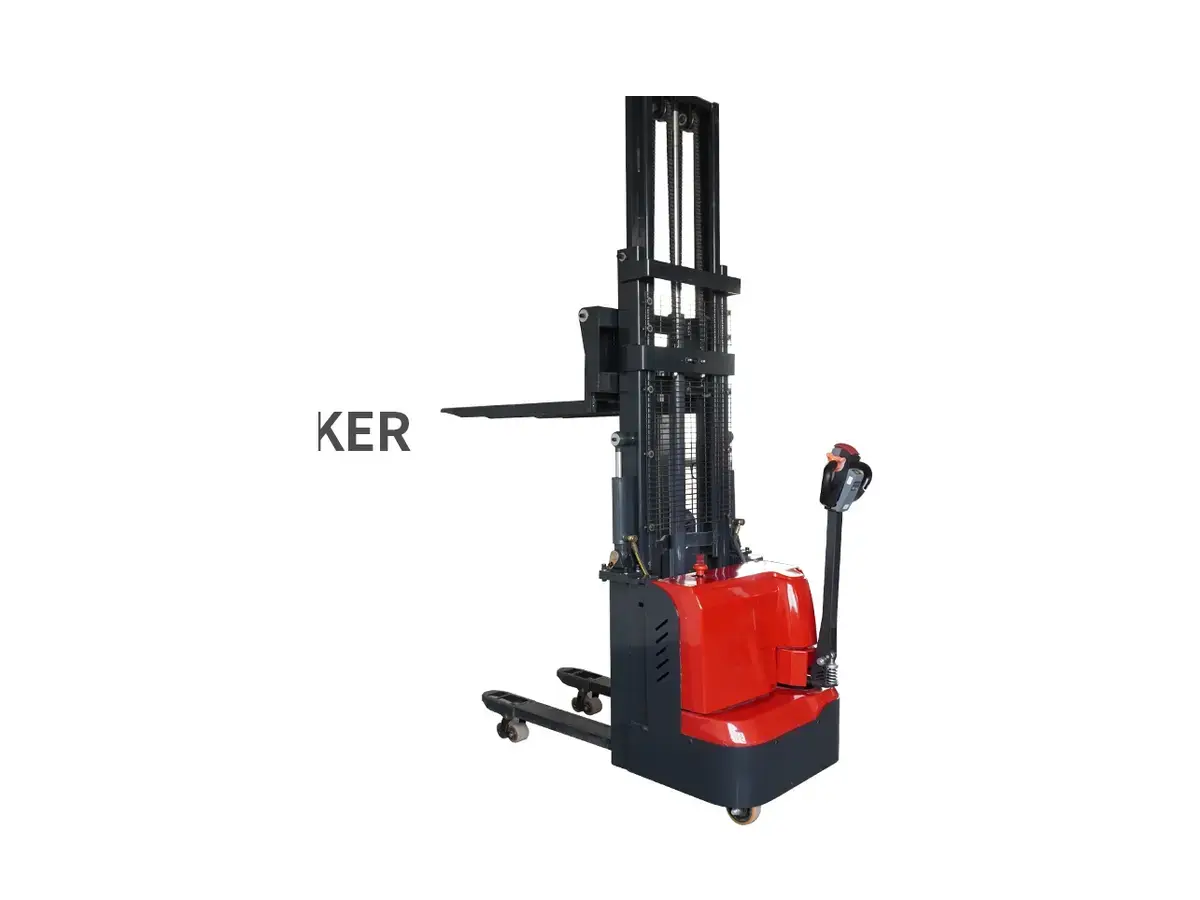
ZJ SW15
Catalogue referenceA 1.5-tonne pedestrian stacker with six listed lift-height directions and configurable battery capacity.
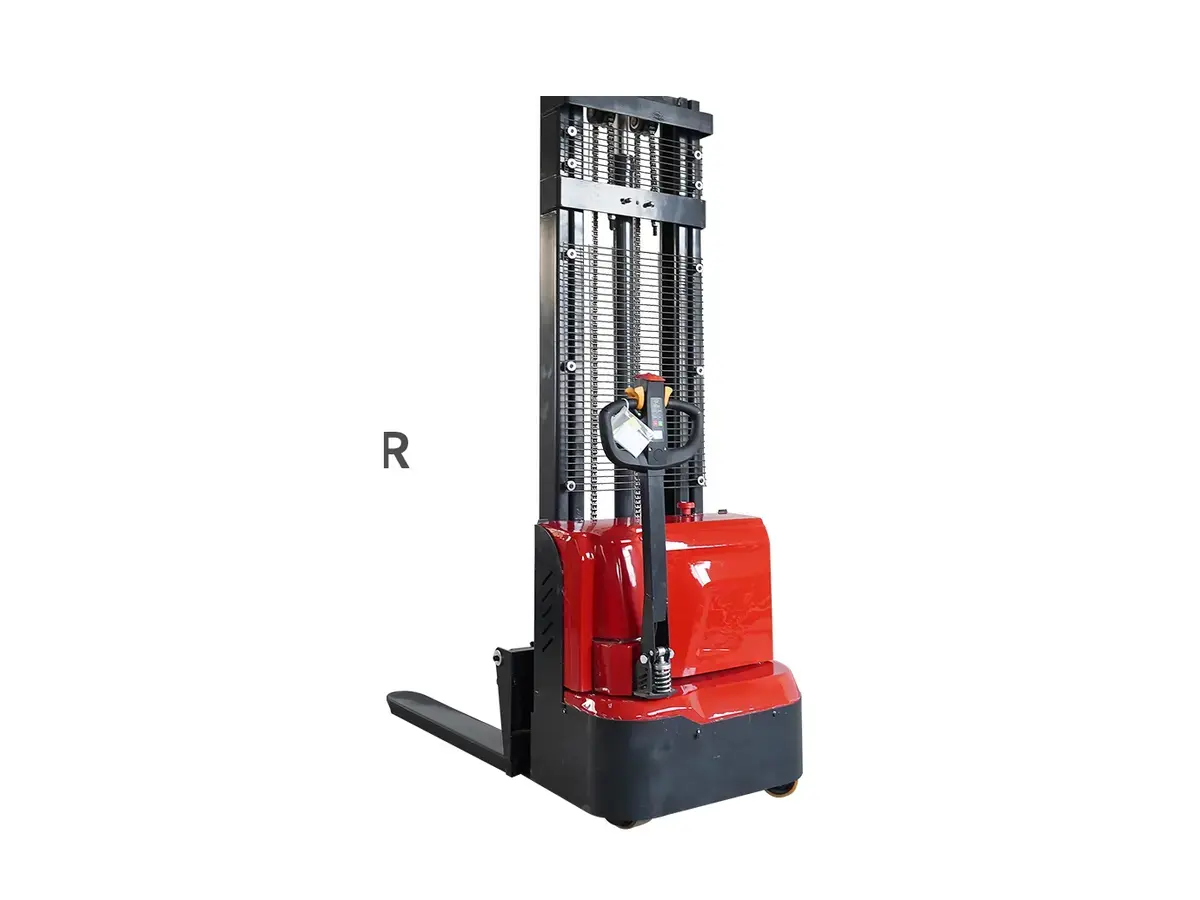
ZJ SW20
Catalogue referenceA heavier pedestrian stacker direction with 800 mm body width and multiple mast-height options.
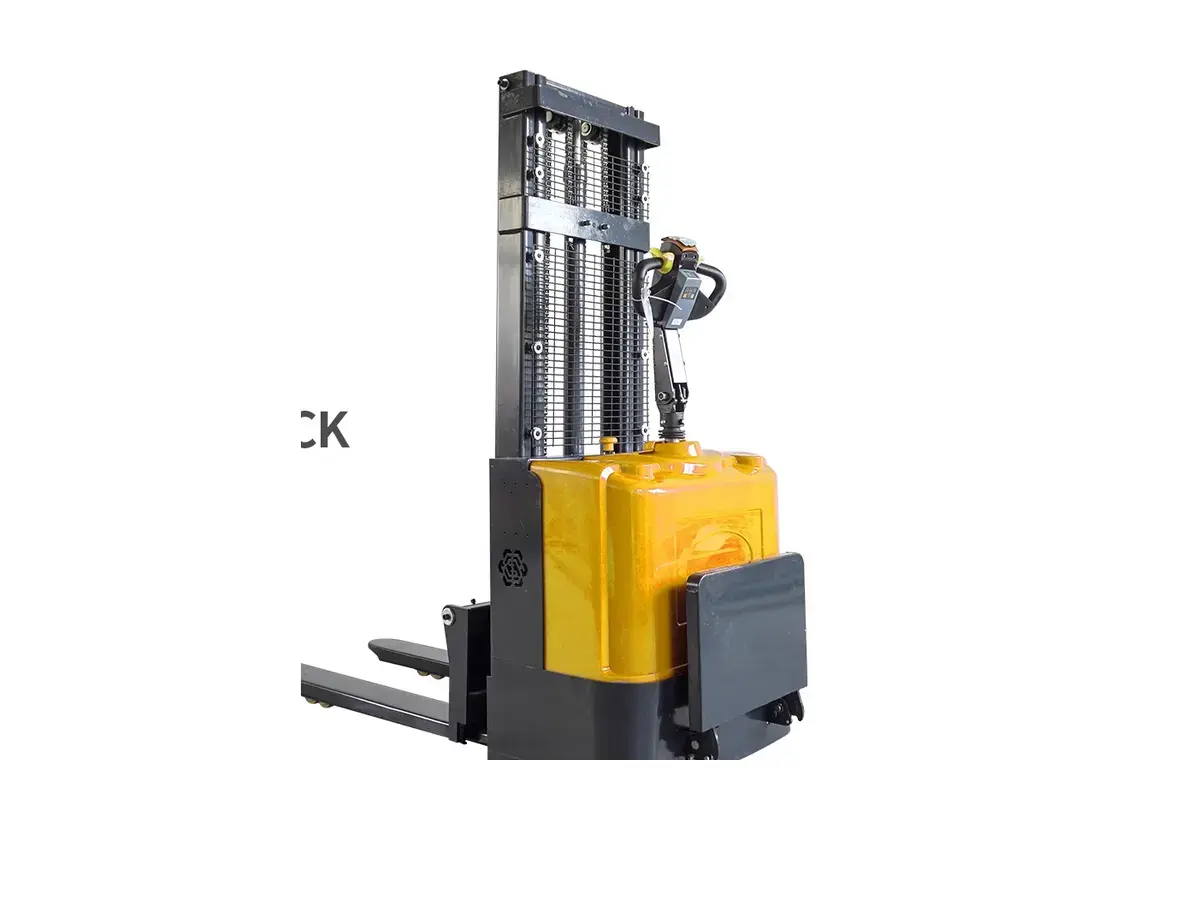
ZJ SR15
Catalogue referenceA compact stand-on stacker platform for longer routes and vertical pallet placement.
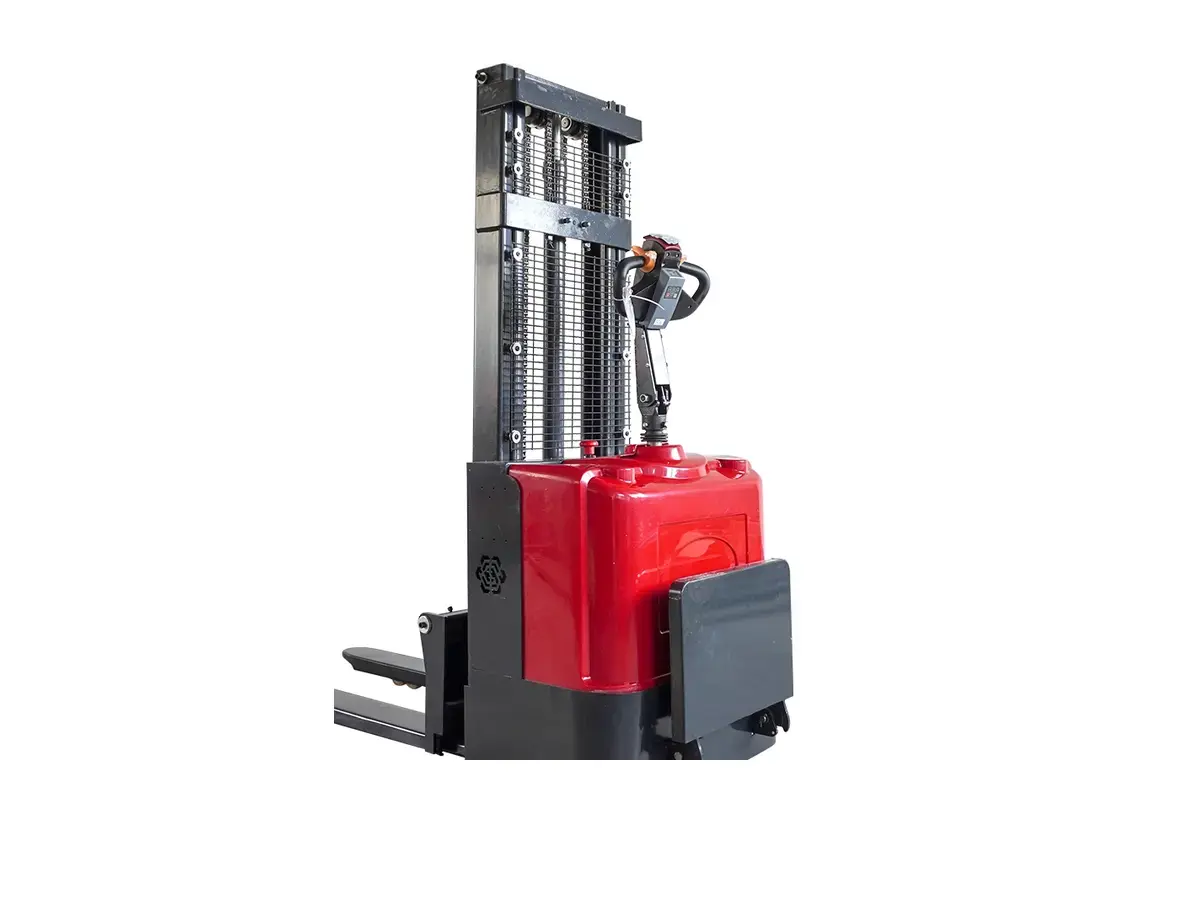
ZJ SR20
Catalogue referenceA 2-tonne stand-on stacker with an 855 mm body width and a foldable operator platform.
08 / REQUEST FOR QUOTATION
Send one complete
lithium forklift brief.
Include load weight and dimensions, load centre, lift height, aisle and route, surface and gradients, hours and shifts, charging windows, destination power, temperature, attachments, quantity and delivery location.
09 / LITHIUM FORKLIFT FAQ
Practical answers
before model selection.
What is a lithium forklift?
A lithium forklift is an electric forklift whose traction-energy package uses a compatible lithium-ion battery, battery management system and matched charger. The battery must be approved for the exact truck and controls.
Is every electric forklift a lithium electric forklift?
No. Electric forklifts may use different battery directions. Confirm battery chemistry, voltage, capacity, charger and compatibility for the selected model.
Which ZJ models explicitly list a lithium-ion direction?
The current website catalogue data explicitly lists lead-acid or lithium-ion directions for ZJ SW15, SW20, SR15 and SR20 electric stackers.
Can an E Series counterbalance forklift use a lithium battery?
Discuss the exact E Series model with ZJ. Lithium availability is not assumed across the range and must be confirmed with the current technical configuration and quotation.
How long does a lithium forklift battery run?
Operating duration cannot be confirmed from battery chemistry alone. It depends on battery capacity, load frequency, travel, gradients, attachments, temperature, idle time and the actual shift.
How long does lithium forklift charging take?
Charge time depends on the battery capacity, state of charge, charger output, temperature and approved charging profile. Request configuration-specific charging information.
Can lithium forklifts work in cold storage?
A suitable configuration may be considered only after confirming permitted battery temperatures, condensation controls, charging location, enclosure and the complete cold-store route.
What should I send a lithium forklift manufacturer for a quotation?
Send maximum load and dimensions, load centre, lift height, route measurements, surface and gradients, hours and shifts, charging windows, destination power, attachments, quantity and delivery location.
What should a complete lithium forklift quotation identify?
It should identify the truck model, capacity basis, mast, forks, tyres, attachment, battery chemistry and capacity, BMS direction, charger input and output, documents, packing, terms and exclusions.
Is lithium always better than lead-acid?
No single battery direction is best for every operation. Compare duty cycle, charging opportunities, site infrastructure, temperature, maintenance plan, commercial terms and model availability.
YOUR NEXT MOVE STARTS HERE
LET’S LIFT
YOUR AMBITION.
Tell us what you move. We’ll start with your requirements.
ZJ